
Governance

Governance
“Governance for sustainability is defined as the set of written and unwritten rules that link ecological citizenship with institutions and norms of governance.”– International Union for Conservation of Nature (IUCN)
Good Governance
IPB University does not label a single “Diversity & Equality Office,” but it has established structures and programs that effectively perform the role of advising on and implementing policies, programs, and training related to diversity, equity, inclusion, and human rights on campus.
Key Mechanisms and Examples:
- Task Force for the Prevention and Handling of Sexual Violence (PPKS)
Responsible for preventing and addressing sexual violence, this unit conducts coordinated, ethical, and victim-centered actions by gathering information, providing consultations, and collaborating with relevant stakeholders. It ensures confidentiality, safety, and inclusive support, while monitoring follow-up actions, reporting regularly, and maintaining integrity and independence in all processes. - Centre for Gender and Child Studies (IPB University)
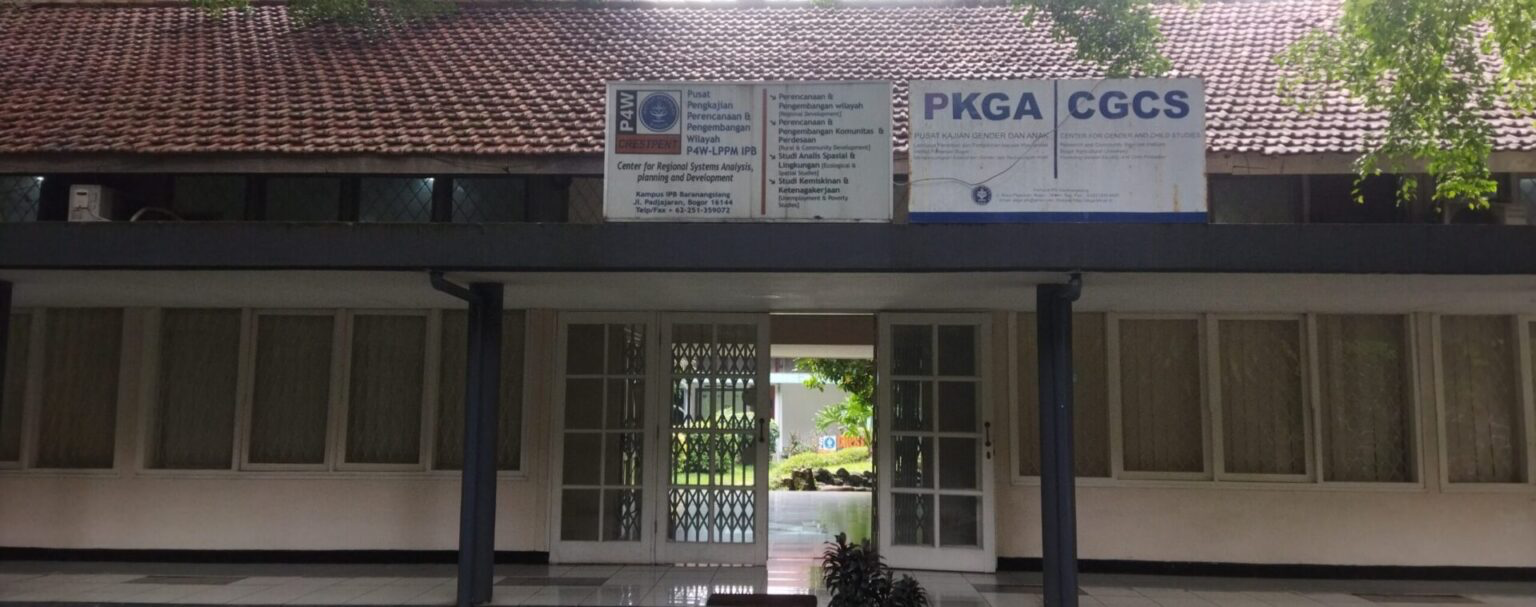
- Serves as the university’s principal in-house expert body on gender equality, inclusion, and child rights.
- Provides technical expertise, research, and policy advice to the university and external stakeholders.
- Implements trainings, capacity-building programs, advocacy initiatives, and multi-stakeholder collaborations to promote equity and inclusion.
- Integrates gender equality and child protection perspectives across the university’s Tri Dharma of Higher Education (education, research, and community service).
- Supports institutional and network development for women’s studies and related initiatives.
- Student-Led Programs and Awareness Initiatives
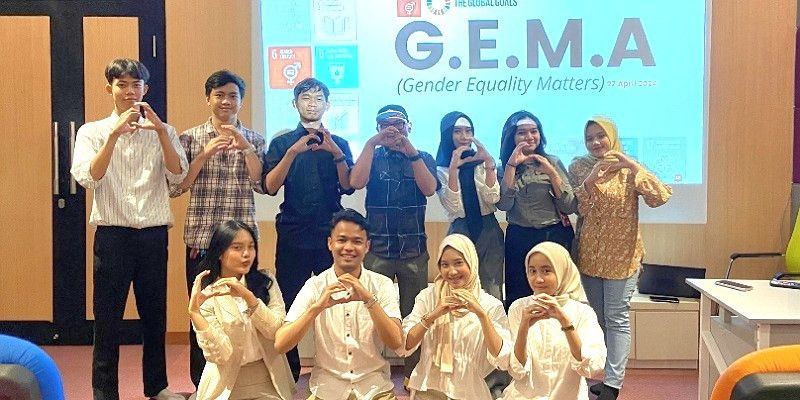
- Example: G.E.M.A (Gender Equality Matters), conducted by the Digital Communication and Media Study Program at IPB Vocational School.
- Activities included observation, research, interviews, discussion forums, and action-oriented projects on gender equality, involving both female and male students.
- External Collaboration and Policy Influence
- The Centre for Gender and Child Studies collaborates with local governments and agencies to strengthen gender-responsive policies, such as the Gender Mainstreaming Working Group in Indramayu Regency.
- Provides guidance and advocacy for regional work units on gender equality, contributing to broader societal impact and recognition such as the Parahita Ekapraya Award (APE).
- Research Ethics Committee
established to ensure that all research activities—particularly those involving humans, animals, and plants—are conducted in accordance with fundamental ethical principles, including non-maleficence (avoiding harm), beneficence (promoting well-being), autonomy (respecting the rights of research subjects), and justice (ensuring fairness and equity)
While IPB University does not maintain a formal “Diversity & Equality Office” title, the Centre for Gender and Child Studies functions as the main body fulfilling this role. It advises the administration, implements programs and trainings, conducts research and monitoring, and engages in advocacy and capacity-building on issues of diversity, equity, inclusion, and human rights on campus and beyond.
IPB University has a comprehensive anti-discrimination policy designed to ensure fairness, respect, and equality across the university community, including students, faculty, staff, and visitors. IPB University has an anti-discrimination and anti-harassment policy. IPB also has Rector’s Regulation No. 43 of 2025 on Gender Mainstreaming within the framework of Gender Equality, Disability, and Social Inclusion (GEDSI). The regulation outlines core principles such as equality, non-discrimination, inclusivity, and transparent, data-driven governance
Key Features:
- Equal Opportunity:
- Ensures all members of the university have equal access to education, employment, and other opportunities.
- Strictly prohibits discrimination based on race, ethnicity, religion, gender, disability, age, or other characteristics.
- Promotes an inclusive environment where diversity is valued, fostering mutual respect and understanding.
- Zero Tolerance for Harassment:
- Prohibits verbal, physical, or emotional harassment targeting individuals or groups.
- Incidents of discrimination are taken seriously, with established procedures for prompt resolution.
- Support and Resources:
- Offers counseling and support services for individuals experiencing discrimination.
- Conducts awareness and educational programs to prevent discrimination and promote inclusion.
- Grievance Procedure:
- Provides a clear and confidential process for reporting discrimination.
- Ensures thorough investigation and corrective action when necessary.
Practical Initiatives Supporting Anti-Discrimination:
- Sexual Violence Prevention: Collaboration with DWP Undana and the Undana Sexual Violence Prevention Task Force to strengthen campus safety and institutional capacity in addressing sexual violence.
- Safe Digital Spaces: Joint seminars with the Ministry of Communication and Informatics (Kominfo) and the House of Representatives of Indonesia to educate on online sexual violence prevention and promote positive digital culture.
- Anti-Bullying Campaigns: Development of the educational board game Buddy Pekerti and the #1MillionYouthsStopBullying campaign to prevent bullying among students and promote safe, supportive learning environments.
Through these policies and initiatives, IPB University actively fosters a safe, inclusive, and supportive environment, ensuring that all members of its community can participate fully and equitably in academic and campus life.
IPB has university principles and commitments against organized crime, corruption & bribery through the formation of working groups and collaborating with the Corruption Eradication Commission (KPK).
<<MoU BETWEEN KPK and IPB in Efforts To Eradicate Corruption>>
IPB University also formed an Anti-Corruption Task Force, as stated in Rector’s Decree No. 122 Year 2023.
IPB University has introduced a new course titled “Integritas dan Budaya Antikorupsi” (Integrity and Anti-Corruption Culture) as part of its Enrichment Course curriculum (K2020). This initiative aims to educate students on anti-corruption principles and foster a culture of integrity within the academic community. The course covers topics such as the theory and concepts of corruption, academic integrity, anti-corruption values and principles, relevant legislation, causes of corruption, and national and international anti-corruption instruments.
<<Integrity and Anti-Corruption Culture Course>>
The Anti-Corruption Working Group undertakes several key initiatives, including:
IPB University establishes and upholds clear ethical values—such as integrity, respect, fairness, and responsibility—through formal regulations that are publicly accessible and periodically reviewed to ensure their continued relevance. These values are enshrined in the Academic Senate Regulation, which serves as a foundational guideline for ethical conduct within the university community.
As part of its commitment to continuous improvement, IPB University has reviewed and updated Academic Senate Regulation No. 33/SA-IPB/P/2019, resulting in the issuance of Academic Senate Regulation No. 34/SA-IPB/P/2020 on ethics in academic and community life for the academic community and educational staff of Institut Pertanian Bogor. The updated regulation reinforces shared values and provides comprehensive guidance to ensure that all members of the university uphold high standards of ethical behavior in both academic and social contexts.
In addition, IPB University reinforces its ethical framework through the Sustainability Value document, which complements the formal regulations by integrating sustainability principles into the university’s core values and institutional practices. More information can be accessed at: IPB SUSTAINABILITY VALUE
IPB University integrates ethical training into academic and co-curricular activities to ensure the consistent internalization of ethical values. Examples of these initiatives include:
- Annual “7 Habits” training for all first-year students, focusing on character building, integrity, and personal responsibility
- Establishment of a Research Ethics Committee to strengthen academic and research integrity within the university
- Onboarding programs for new staff to promote ethical values and support the implementation of the Tridharma of higher education
Furthermore, ethical awareness is embedded in the student orientation program (MPKMB), which includes:
- Sessions on holistic ethical organisational culture
- Information sessions on university rules and regulations
- Screening of the “Tata Tertib Kehidupan Mahasiswa IPB” video prior to the commencement of the Common Preparatory Program (PPKU)
Through these integrated governance and training mechanisms, IPB University ensures that ethical values are systematically embedded and consistently practiced across the entire academic community.
For more information, please refer to the following links:
- https://www.ipb.ac.id/news/index/2025/05/jaga-integritas-akademik-dan-riset-ipb-university-bentuk-komite-etik-penelitian/
- https://www.ipb.ac.id/news/index/2025/07/pegawai-baru-ipb-university-ikuti-onboarding-untuk-wujudkan-tridarma-yang-bermakna/
- https://studentorientation.ipb.ac.id/id-ID/articles/dan-ipb-hadir-mengubah-segalanya
IPB University has a total of 184 student organizations, comprising 7 university-level student organizations, 74 faculty or school-level organizations, 36 Student Activity Units (UKM), 37 student communities, 27 regional student organizations, and 3 national and international student organizations.
At each level—university, faculty, and department—student representation is facilitated through formal student bodies, including the Student Executive Board (BEM), Student Representative Council (DPM), student professional associations, and Student Activity Units (UKM), which collectively support student engagement, leadership development, and organizational participation.
<<Rector’s Decree No. 13 of 2025 on Student Organizations of IPB University>>
<<Rector’s Decree No. 14 of 2025 on Head of Student Organizations of IPB University>>
IPB University has elected representatives in the university’s highest governance body, the Board of Trustees (MWA). Based on IPB University’s MWA Decree No. 09/WMA-IPB/P/2021 concerning Organizational Structure and Governance, the MWA consists of 17 members representing various stakeholders, including the Ministry of Education, the Rector, the Academic Senate representing eight lecturers, the head of the educational energy organization, the president of the student organization, the head of the alumni association, and four community representatives. Through this composition, IPB University ensures the presence of elected representatives from students, lecturers, and educational staff in the university’s highest decision-making body.
Every year, IPB holds an annual meeting by the Board of Trustees to discuss policy and annual performance report.
MWA General Assembly 2024
MWA General Assembly 2025
IPB University actively supports and facilitates a holistic ethical organisational culture through institution-wide governance structures and continuous capacity-building programs that apply to both students and staff.
Ethical compliance is reinforced by dedicated institutional bodies that ensure the implementation of academic integrity, professional standards, and responsible conduct across all levels of the university. Key offices and committees responsible for ethical compliance include the following:
- IPB Academic Senate Commission
- Directorate of Planning and Sustainable Campus Development
- Directorate of Student Affairs
- Directorate of Human Resources


