SDG 10: Reduced Inequalities

SDG 10: REDUCED INEQUALITIES
“Equality needs to underpin every aspect of sustainability if the objectives of the SDGs are to be met. Although SDG 5 Explores this through the prism of gender, SDG 10 takes a broader look at intersectionality of disadvantages. This disadvantages can be felt through all of the other key issues raised by the SDGs – disadvantaged groups are both more likely to be unable to take advantage of progress and to suffer from the effects of climate change.”
(THE Impact Rankings)

Measures Against Discrimination
Non-discriminatory admissions policy
Access to university track underrepresented groups applications
Access to university underrepresented groups recruit
Anti-discrimination policies
University diversity officer
Support for underrepresented groups
Accessible facilities
Disability support services
Disability access scheme
Disability accommodation policy
Anti Harrasment Policy
IPB University has an official, publicly accessible admissions policy that strictly adheres to non-discriminatory principles and incorporates clear guidelines for affirmative action (positive discrimination). The primary legal foundation for student admissions is established under Rector Regulation No. 1 of 2022 on the Guidelines for New Student Admissions at Institut Pertanian Bogor, specifically on Page 4, Point a, which guarantees a fair, objective, transparent, and accountable admission process without discrimination.
This framework is reinforced and updated by Circular Letter No. 66615/IT3.D12/TU/2025 regarding Creating a Gender-Responsive and Socially Inclusive (GEDSI) Campus. Under Point c of the Circular, IPB University officially guarantees the implementation of equality, justice, and non-discrimination across all student admission processes, regardless of gender, religion, ethnicity, race, socioeconomic status, disability, or background. Furthermore, Points b, c, and d define the university’s positive discrimination policies. Under Points b and c, IPB University provides affirmative pathways and dedicated access for socially inclusive groups including women, applicants with disabilities, economically disadvantaged students, and candidates from Frontier, Outermost, and Underdeveloped (3T) regions based on clear, objective, and verifiable criteria. Additionally, Point d explicitly encourages faculties or schools with female student representation below 30 percent to implement targeted affirmative policies for female applicants to enhance representation and expand equitable access to higher education.
For more information, click the hyperlink below:
IPB University systematically measures, monitors, and publishes application and admission data for various underrepresented groups. IPB University has reopened admissions for the 2025/2026 academic year through the Talent Track (Jalur Talenta). This track is designed for high school (SMA/MA/SMK) graduates with proven achievements in extracurricular activities, offering them opportunities to develop both academic and non-academic potential. Admitted students are required to participate in training and development programs aligned with their achievements. The Talent Track comprises several selection categories: Academic Olympiad Champions / Academic Achievements, Hafiz Quran (Quran Memorizers) Scouts (Kwarda West Java Scouting Movement), Sports, Arts, Language Debate (covering English, Arabic, Mandarin, Russian, French, and Spanish) and Talent Scouting (specifically for IPB Golden Ticket recipients).
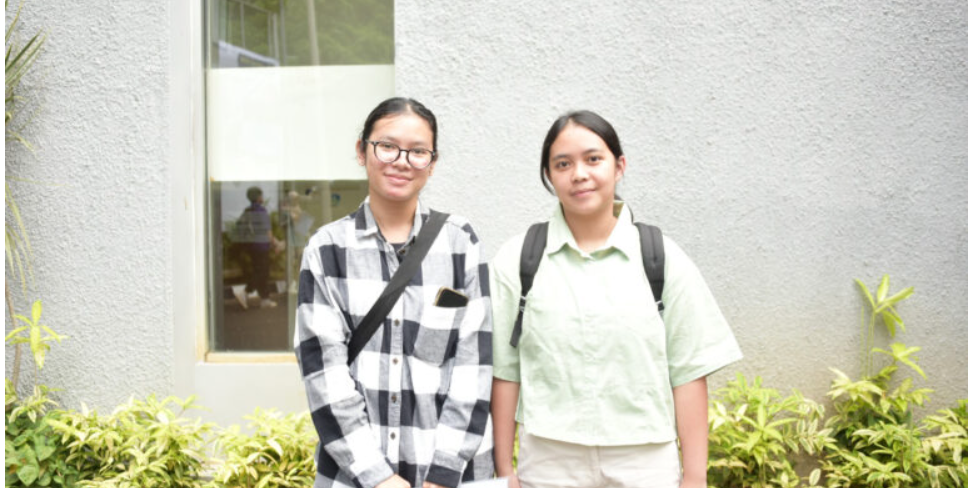
IPB University actively monitors and supports access for underrepresented and potentially underrepresented groups, including students from low-income backgrounds, persons with disabilities, and non-traditional learners. This commitment was demonstrated during the 2025 Computer-Based Written Test for the National Selection Based on Tests (UTBK-SNBT), where IPB University highlighted its dedication to inclusive, disability-friendly education. Among the participants was Josephine Nurhayati Netanya, a hearing-impaired student from Santi Rama Special Needs School (SLB Santi Rama), who took the examination at the IPB University Vocational School Campus.
IPB University bersama Himpunan Alumni IPB (HA IPB) dan Yayasan Alumni Peduli IPB (YAPI) secara konsisten menyalurkan Beasiswa Alumni bagi mahasiswa IPB University. Program ini bertujuan untuk memberikan akses pendidikan yang inklusif serta membantu mahasiswa yang memiliki keterbatasan finansial agar dapat menyelesaikan studinya tanpa terkendala biaya. IPB University, together with the IPB Alumni Association (HA IPB) and the IPB Alumni Care Foundation (YAPI), consistently provides Alumni Scholarships to IPB University students. This program aims to provide inclusive access to education and help students with financial constraints complete their studies without being hindered by costs.
IPB University in a planned, structured, and sustainable manner implements affirmative action policies and measures to recruit and support students, faculty, and administrative staff from underrepresented groups. This is established through the legal foundation of IPB Rector’s Regulation No. 1 of 2022 concerning New Student Admission Guidelines and Rector’s Decree No. 133/IT3/LK/2020 regarding Non-Discrimination Policy and SDGs Enforcement. Expanding Access to IPB University Higher Education for Remote Areas Through the 2025 BUD Scheme In May 2025, IPB University officially opened the new student admission process for the Regional Representative Scholarship (BUD) scheme for the 2025/2026 academic year. The BUD program is an affirmative admission strategy specifically designed to recruit prospective students from underdeveloped, frontier, and outermost (3T) regions, as well as candidates sponsored by local governments across Indonesia. Through partnerships with local governments and regional stakeholders, this initiative directly addresses disparities in higher education access while actively promoting applications from economically and geographically underrepresented groups.
IPB University strictly maintains a comprehensive policy prohibiting all forms of discrimination across the campus community, applying to both staff (faculty and educational personnel) and students. For university staff, anti-discrimination protection is established under Rector Regulation No. 30 of 2024 on the Management of IPB Staff, specifically under Article 2 Point g (page 7), which guarantees every employee’s right to protection from discrimination and equal opportunity. This commitment is institutionalized through Rector Decree No. 428 of 2025 on IPB’s Commitment to Achieving the Sustainable Development Goals, particularly on Page 37, Point 2a, mandating the institution to ensure an inclusive, fair, and discrimination-free working and learning environment. Meanwhile, regarding student conduct, Rector Regulation No. 3 of 2025 on the Rules of Student Life at IPB strictly prohibits discrimination, violence, and intolerance; from Article 9 (page 49) to Article 11, students are explicitly forbidden from engaging in verbal violence/harassment or demonstrating intolerance toward diversity, with violations classified as severe infractions under Page 53 Article 17 point (3).
For more information, click the hyperlink below:
IPB University operates a specialized institutional body mandated by university leadership to manage, provide policy recommendations, and execute programs related to equality, diversity, and inclusion. This unit is represented by the Task Force for the Prevention and Handling of Sexual Violence (Satgas PPKS IPB) in collaboration with the Center for Gender and Child Studies (CARE IPB). Throughout 2025, these institutions actively conducted human rights awareness training, gender equality education, and the handling of inclusivity violation cases within the campus environment.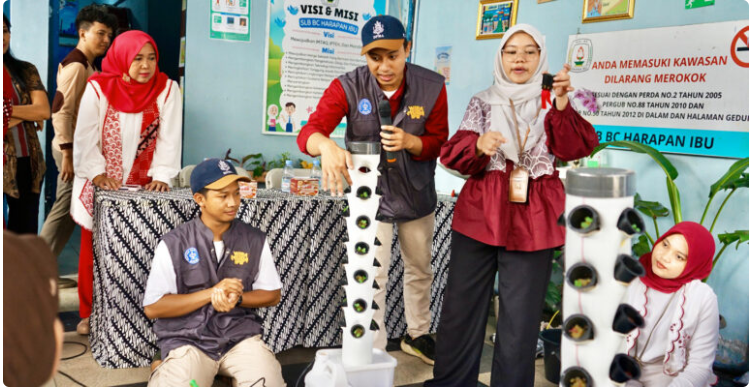
Dharma Wanita Persatuan of the Coordinating Ministry for Community Empowerment (DWP Kemenko PM), in collaboration with IPB University through the Directorate of Agromaritime Community Development (DPMA), introduced hydroponic farming practices to students and teachers at Special School (SLB) BC Harapan Ibu, Kemayoran, Central Jakarta. The program aims to provide access to adaptive agricultural knowledge and skills with economic potential to foster independence among children with disabilities.
IPB University provides institutional mentoring, counselling, and peer-support programmes to support students, academic staff, and administrative personnel, including members of underrepresented groups. These programmes are supported by formal institutional policies, university-level counselling services, faculty-based support systems, trained peer counsellors, mentoring initiatives, and affirmative assistance programmes. They aim to promote equitable participation, psychological well-being, academic success, professional development, and an inclusive university environment.
IPB University’s commitment to mentoring and supporting underrepresented groups is formally established through Circular Letter No. 24799/IT3/KP/2021 concerning the Development of a Gender-Responsive and Socially Inclusive Campus. This institutional directive explicitly identifies women, persons with disabilities, individuals from economically disadvantaged backgrounds, and people from Indonesia’s frontier, outermost, and disadvantaged (3T) regions as groups requiring particular attention. The policy calls for affirmative access schemes, mentoring programmes, scholarships, and other support mechanisms to improve their participation in education, research, community engagement, and university activities. It also encourages institutional monitoring of participation by different social groups to promote equity and inclusion.
IPB University has established a formal “Tim Bimbingan dan Konseling” (TBK), or Guidance and Counselling Team, to provide psychological, personal, social, and academic assistance. The University’s 2024 SDG 3 sustainability report documents free counselling services for students and faculty- and department-level counselling arrangements, supported by Rector’s Decree No. 60/IT3/KM/2021.
Counselling services address various challenges, including psychological distress, academic adjustment, interpersonal difficulties, family problems, financial pressures, and difficulties adapting to university life. These services are especially relevant to students experiencing disadvantages associated with socioeconomic circumstances, disability, geographic background, or limited social support. IPB University also provides individual and group counselling, mental health assessment, and referral pathways for individuals requiring further professional assistance.
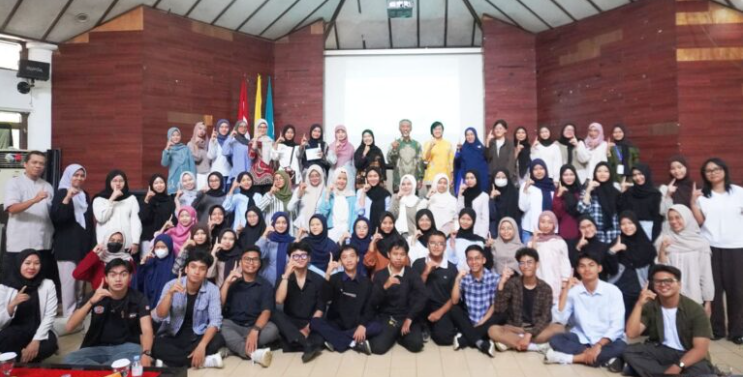
The Faculty of Human Ecology (FEMA) at IPB University, in collaboration with the IPB Guidance and Counseling Team (TBK), is expanding access to professional mental health services by providing psychologists and psychiatrists to the academic community. This initiative underscores IPB University’s commitment to supporting SDG 10 (Reduced Inequalities), particularly regarding indicators related to the protection and support of socially excluded and underrepresented groups. These services are designed to be free and responsive to ensure that students with disabilities, recipients of affirmative action scholarships, as well as students from 3T regions and those from economically vulnerable backgrounds have access to a safe space free from stigma. This is achieved by integrating professional medical care with a peer counseling support network. This program trains students to provide initial emotional support, listen empathetically, and offer assistance to fellow students facing academic, personal, or psychosocial difficulties, under the supervision and with referral support from professional counselors.
IPB University extends its counselling and mentoring arrangements through faculty-level mechanisms. For example, the Faculty of Forestry and Environment has documented counselling provision for students, lecturers, and university employees. The Faculty of Engineering and Technology also operates FTT Care, a dedicated student mental health support service providing confidential counselling and assistance to undergraduate, master’s, and doctoral students. Its services are delivered by trained peer counsellors under professional supervision and coordinated with the university-level Guidance and Counselling Team. These arrangements demonstrate that mentoring and counselling support is institutionalized through both centralized university services and decentralized faculty-level structures.
IPB University implements mentoring and affirmative support initiatives to help students from disadvantaged or underrepresented backgrounds navigate higher education and access academic opportunities. The University’s student affairs services provide information about the Affirmative Higher Education Scholarship (Afirmasi Pendidikan Tinggi, ADiK), which targets students from 3T regions, Papua, repatriated Indonesian students, and persons with disabilities. The scheme includes tuition support and living allowances, helping reduce financial barriers to higher education. In addition to financial assistance, IPB University’s institutional support framework emphasizes academic guidance, mentoring, and assistance in adapting to campus life. The University also supports students from diverse geographical and cultural backgrounds through student organizations, peer networks, and academic mentoring initiatives that contribute to social integration, a sense of belonging, and academic development.
IPB University adopts a broader approach to student well-being that combines counselling, peer support, psychological assistance, and practical welfare initiatives. In October 2025, the University’s Vice Rector for Education and Student Affairs publicly highlighted the provision of trained lecturer counsellors, peer counsellors, psychiatrist collaboration, and regular mentoring activities in student residences. These activities include support from faculty- and school-based maternal mentors (ibu asuh) to help students navigate university life. Complementary student welfare programmes, such as affordable nutritious meals and food assistance, also help address challenges experienced by financially disadvantaged students.
The Directorate of Student Affairs coordinates the University’s broader student counselling framework, supported by faculty counsellors, trained peer counsellors, and relevant professional services. In April 2026, IPB University undertook an institutional revitalization of its Guidance and Counselling Team, emphasizing early identification of student difficulties, individual assistance, referral systems, interdepartmental collaboration, digital service improvement, and monitoring and evaluation. This approach is consistent with the University’s broader commitment to gender equality, disability inclusion, social equity, and the provision of accessible institutional support services. Through its formal inclusion policies, university-wide counselling structures, trained peer-support networks, faculty-level programmes, and affirmative mentoring initiatives, IPB University demonstrates an established institutional commitment to supporting members of underrepresented groups. These measures contribute to a university environment in which individuals from diverse backgrounds can access guidance, strengthen their well-being, overcome barriers to participation, and develop their academic and professional potential.
IPB University provides accessibility facilities across major campus buildings and academic environments, including ramps, elevators, wheelchair-accessible entrances and pathways, tactile paving (guiding blocks) for visually impaired individuals, designated parking areas, and accessible restrooms. These measures are documented in the University’s SDG 10 sustainability reporting, which identifies accessible facilities as a key component of institutional efforts to reduce inequalities. In October 2025, IPB University’s Vice Rector for Education and Student Affairs, Prof. Deni Noviana, publicly confirmed that the University had installed additional elevators in several faculty and school buildings over the preceding three years. He also confirmed the implementation of accessible classroom placements for students with mobility limitations, allowing them to attend lectures on more accessible floors. This demonstrates that accessibility measures are actively being implemented in academic operations and infrastructure development.
At the department level, the Department of Islamic Economics in the Faculty of Economics and Management has documented disability-friendly facilities, including wheelchair ramps at strategic building entrances and connecting areas, accessible elevators, and arrangements to support students with mobility limitations. IPB University provides facilities accessible to people with disabilities through the Information and Documentation Management Officer (PPID) and the Integrated Service Center (PLT/ISC), located near the main administrative building at the Dramaga Campus. These facilities include designated waiting area seating, accessible pedestrian pathways, disability-specific road markings, priority service counters, accessible restrooms, and auxiliary information facilities. The University PPID also provides public service announcements, information request forms, and information documents in Braille. Crucially, these facilities are not merely planned steps. They are documented through official institutional publications, including photographic records illustrating accessibility infrastructure at the Integrated Service Center.
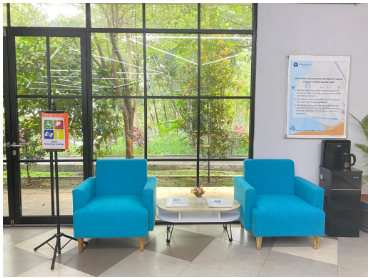
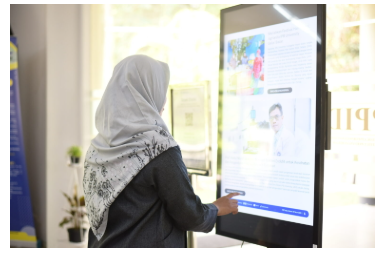

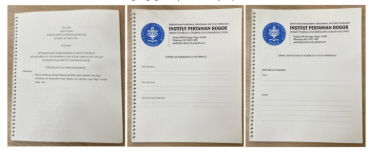


IPB University complements its physical accessibility infrastructure with digital accessibility features. Its official public information platforms offer text-to-speech functionality and customizable website display features to support visually impaired users and other accessibility requirements. Additional measures include digital signage, touch-screen public service information, Braille documents, and audio-visual information supported by sign language interpretation. These facilities aim to ensure that individuals with disabilities can independently access university information, administrative procedures, and public services. Institutional sustainability reporting also documents accommodation arrangements for students with disabilities, including the provision of ground-floor rooms in student residential/dormitory facilities. Earlier institutional reports similarly identify accessible pedestrian pathways, elevators, and campus transport assistance as measures to support individuals with mobility limitations. These initiatives demonstrate that IPB University’s accessibility efforts extend beyond academic buildings to address the broader campus experience of students, encompassing mobility, accommodation, and access to daily services.
The development of accessible infrastructure is supported by IPB University’s institutional planning and sustainability commitments. The 2019–2023 Strategic Plan incorporated disability-friendly building construction within its Green and Smart Infrastructure development agenda. More recently, Rector Regulation No. 43 of 2025 reinforced institutional expectations for physical accessibility and reasonable accommodations through formal standards and governance responsibilities. IPB University also collaborates with the National Disability Commission of the Republic of Indonesia to strengthen inclusive campus development, accessibility awareness, and institutional capacity. Through these regulatory frameworks, existing accessible facilities, documented infrastructure improvements, and institutional monitoring arrangements, IPB University demonstrates that providing accessible facilities for people with disabilities is an established and ongoing component of university governance and campus development. The University remains committed to expanding and enhancing accessibility so that individuals with disabilities can fully participate in academic, professional, and campus life.

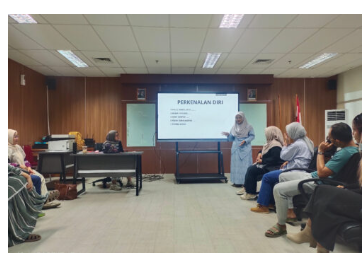
IPB University continuously demonstrates its commitment to inclusive education by providing comprehensive services and facilities that enable students with disabilities to study and engage seamlessly in campus life. To guarantee equal access, the university deploys personal assistants, sign language interpretation services, counseling support, and tailored academic accommodations based on individual needs. Furthermore, both its physical and digital infrastructure are designed to be disability-friendly, ranging from dedicated accessible pathways, priority service counters, and Braille documents to text-to-speech features on the official website.
Inclusive communication is further strengthened through specialized training for staff at the Integrated Service Center and the Information Management and Documentation Officer (PPID), who hold Level 1 Sign Language Certification, alongside the provision of official university information via sign language-supported videos. This commitment was tangibly demonstrated during the 2025 UTBK-SNBT entrance examination at the IPB University Vocational School Campus, where three candidates with disabilities (two deaf and one physically disabled) were successfully supported in a comfortable testing environment, drawing high appreciation from their parents.
IPB University collaborates with the National Commission on Disability of the Republic of Indonesia (Komisi Nasional Disabilitas Republik Indonesia) to strengthen institutional capacity, enhance inclusive services, and advance the development of a disability-friendly campus environment. Through these integrated measures, IPB University demonstrates that its commitment to disability inclusion extends beyond physical accessibility to encompass direct personal assistance, communication support, academic accommodations, and student welfare services. These arrangements actively contribute to establishing an inclusive academic environment where individuals with disabilities can participate meaningfully and equitably in all aspects of campus life.
IPB University has established and implemented institutional access schemes to ensure that persons with disabilities have fair opportunities to access higher education, academic activities, campus facilities, and university services. These schemes reflect the University’s commitment to inclusive education, non-discrimination, equal opportunity, and the elimination of physical, academic, and informational barriers that may hinder persons with disabilities from fully participating in campus life.
IPB University reinforces its commitment as an inclusive, disability-friendly campus by implementing new student admissions selections based purely on academic ability without discrimination. This commitment is operationalized through early identification of student needs during registration, provision of easily accessible physical facilities such as elevators and wheelchair pathways, to the transformation of the digital learning system (LMS) in the 2025 Curriculum. Digital learning materials are provided through the University’s Learning Management System (LMS) to support accessibility for visually impaired students and individuals with other special educational needs. Assessment strategies also encompass various methods, including assignments, quizzes, peer assessments, and problem-based learning, as well as more adaptive and comprehensive assessment methods for the entire academic community.
IPB University provides accessible infrastructure and facilities to support independent mobility, participation, and access to university services for persons with disabilities. These facilities include wheelchair-accessible pathways, ramps, elevators, accessible toilets, designated parking areas, priority seating, and specialized service counters. The University also implements accessibility arrangements within its academic facilities. Students with mobility limitations can be placed in classrooms located on more accessible floors, while elevators have been installed in several faculty and school buildings. Accessible facilities are also provided through the University’s Integrated Service Center (PLT/ISC) and public information services. These measures aim to reduce physical barriers and support students, academic staff (lecturers), administrative staff, and campus visitors with disabilities.
IPB University provides accessible public information and administrative services through the Information and Documentation Management Officer (PPID) and the Integrated Service Center. Accessibility measures include priority service counters, designated waiting areas, accessible pedestrian pathways, public information documents in Braille format, digital signage, and accessibility features on the official website. The University also provides text-to-speech functionality and audio-visual information supported by sign language to enhance access for visually impaired and deaf individuals. These services are designed to ensure that disability status does not prevent anyone from accessing institutional information, administrative procedures, or university services.
Disability access schemes at IPB University are reflected in institutional sustainability reporting under Sustainable Development Goal 10 (Reduced Inequalities), specifically on indicators related to accessible facilities, disability support services, and disability access schemes. Through inclusive student admissions, exam accommodations, accessible infrastructure, adaptive learning arrangements, accessible public information, and individualized support, IPB University demonstrates that disability inclusion is implemented through concrete institutional access mechanisms. These initiatives reflect the University’s ongoing commitment to eliminating barriers, promoting equal educational opportunity, and ensuring persons with disabilities can participate meaningfully in academic, professional, and campus life.
IPB University officially implements a comprehensive reasonable accommodation policy and strategy, including dedicated support and funding mechanisms for persons with disabilities across the campus environment. This framework is mandated under Rector Regulation No. 43 of 2025 on Gender Mainstreaming within the Perspective of Gender Equality, Disability, and Social Inclusion (GEDSI) at IPB, specifically under Article 10 (Page 9), which obligates the provision of affirmative access schemes, mentoring programs, scholarships, the provision and maintenance of disability-friendly facilities in every building, as well as adequate budget allocations to support socially inclusive groups. Articles 11–16 (Page 9-11) establish the operational components of disability-responsive services, encompassing institutional leadership, physical accessibility, accessible information and communication, reasonable accommodation, and personnel capacity. The regulation specifically identifies mentoring services, flexible scheduling, proactive service delivery, and priority queues as forms of reasonable accommodation measures. It also promotes universal design principles through accessible pathways, ramps, priority parking, elevators, accessible restrooms, assistive technology, and other supporting facilities. Furthermore, Article 12 (Page 9) explicitly identifies budgetary support as a core component of institutional leadership and governance in implementing inclusive and accessible services. This provision serves as the official policy basis for allocating institutional resources toward reasonable accommodation and disability inclusion, emphasizing that accessibility must be managed through structured institutional planning and budgeting rather than voluntary or temporary initiatives.
Operational guidelines are technicalized through Rector Regulation No. 44 of 2025 on Guidelines for Gender Mainstreaming within the Perspective of Gender Equality, Disability, and Social Inclusion (GEDSI) at IPB, specifically on Page 28, which set forth operational standards for reasonable accommodation, physical and non-physical accessibility, infrastructure adaptations, and sustained funding schemes to guarantee full equity for persons with disabilities.
For more information, click the hyperlink below:
IPB University officially maintains a comprehensive policy strictly prohibiting all forms of harassment, bullying, and violence across the campus community. The foundational code of conduct for students is mandated under Rector Regulation No. 3 of 2025 on the Rules of Student Life at IPB; on Page 13, Article 9 Letter g, students are explicitly forbidden from engaging in verbal violence (harassment/bullying) intended to harm individuals or groups directly or via electronic/social media, with violations classified as severe infractions on Page 15, Article 17 Point (3). Furthermore, strict prohibitions against sexual harassment and violence are outlined on Pages 13–14, Article 11 Letters a and d, while the operational enforcement mechanism is established on Pages 18–19, Article 22 Paragraph (1) and Article 24 Paragraph (1), designating the Task Force for the Prevention and Handling of Violence (Satgas PPK IPB) as the official body responsible for handling complaints (via direct reporting or the IPB Help Center) and coordinating anti-harassment measures. This protective framework is further reinforced by Rector Regulation No. 43 of 2025 on Gender Mainstreaming within the Perspective of Gender Equality, Disability, and Social Inclusion (GEDSI) at IPB, specifically under Article 10 Paragraph (3) Page 30 (and its operational guidelines), which obligates the university to maintain a safe, inclusive, and harassment-free learning and working environment for all university members.
For more information, click the hyperlink below:
SDG 10 IN NUMBER
8,571
Number of students starting a degree
3,264
Number of 1st generation students starting 1st degree
38%
Percentage of first-generation students
37,443
Number of students
611
Number of students from developing countries
1.6%
Percentage of students from developing countries
37,443
Number of students
175
Number of students with disabilities
0.47%
Percentage of students with disabilities
3,145
Number of employees
12
Number of employees with disability
0.38%
Percentage of employees with disability
Select an image for which you want to see the achievement of the SDG indicators






Konten untuk tahun 2024 belum ditemukan atau URL tidak valid.
Konten untuk tahun 2023 belum ditemukan atau URL tidak valid.
Konten untuk tahun 2022 belum ditemukan atau URL tidak valid.
Konten untuk tahun 2021 belum ditemukan atau URL tidak valid.
Konten untuk tahun 2020 belum ditemukan atau URL tidak valid.
Konten untuk tahun 2019 belum ditemukan atau URL tidak valid.
